
Validation Mistakes

Analyses of common mistakes in idea validation: overvaluing praise, sample bias, confirmation thinking, and drawing strong conclusions from weak signals. This category helps readers interpret experiment results more realistically.

A startup founder reviewing customer feedback to separate a weak pitch from an idea validation signal
Validation Mistakes

When Your Idea Didn’t Fail — Your Pitch Did

You ran the test. You talked to ten people, put up a landing page, showed a mockup to a potential customer. The reaction was lukewarm — a few nice words, a “maybe later,” a silence you couldn’t quite read. So you conclude the idea isn’t good enough and move on.


Founder reviewing a laptop screen with AI chat and compliance notes, illustrating an AI validation signal shaped by convenience and risk
Validation Mistakes

The Convenience Trap: Why Risky AI Habits Aren’t the Validation Signal Founders Think They Are

Half of the founders in a recent UK survey admitted to pasting sensitive company information into public AI tools within the last month — and nearly all of them said, in the same breath, that they worry about exactly what that might cost them. This isn’t a story about founders who don’t know better. It’s a story about founders who know better and do it anyway, which is a far more interesting — and more useful — problem to sit with.

Two founders reviewing a partnership plan that looks polished but may hide a weak shared problem, illustrating partnership validation mistakes
Validation Mistakes

The Partnership That Looked Perfect on Paper — And Wasn’t

A domain name gets registered. A logo gets designed. Both founders leave the first meeting energized, already imagining the press release. Everything about the moment says “this is happening.” And yet, as one long-running consultancy discovered after investing real time and money into exactly this kind of arrangement, all that motion can dress up a deal that was never going to work — because the two sides were solving different problems all along.

Founder and sales leader reviewing pipeline metrics to assess sales process validation before hiring a VP of Sales
Validation Mistakes

The VP of Sales Didn’t Fail — Your Sales Process Did

A founder finally raises enough money to stop selling personally. She hires an experienced, confident VP of Sales who talks fluently about quota attainment and ramp curves. Ninety days later, revenue per lead hasn’t moved, the new reps the VP brought in are quietly struggling, and the founder starts telling the board, “we hired the wrong person.” It’s a tidy story. It’s also, in a large share of cases, the wrong diagnosis.

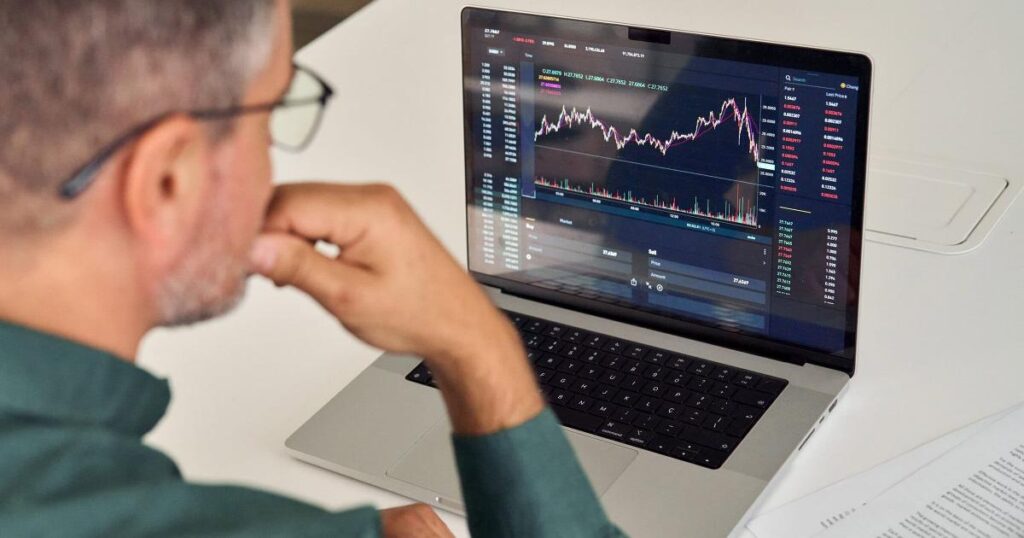
Analyst reviewing market data screens while AI-generated signals converge in a crowded trading environment, showing the risk of AI validation mistakes
Validation Mistakes

When Everyone Asks the Same Machine the Same Question

Picture a hundred hedge fund analysts opening the same news alert at the same moment, running it through the same kind of AI model, and reaching the same trade idea within minutes. Nobody cheated. Nobody colluded. Each analyst simply used a smart tool the way it was designed to be used. And yet the market that emerges from that scene is not smarter than the one it replaced — it is more crowded, more fragile, and, in a strange way, easier to fool.

A row of chickens in a coop illustrating the super chicken trap and the difference between strong signals and a strong system
Validation Mistakes

The Super-Chicken Trap: Why Strong Signals Don’t Always Mean a Strong System

A founder recently told me their beta users “loved” the product — glowing comments, five-star reactions, one enthusiastic superfan who wouldn’t stop talking about it. Six months later, almost none of those people paid for it. Nothing about the individual signals was fake. The mistake was assuming that a handful of strong local signals summed up to a strong global truth. That gap — between what looks like proof and what actually is proof — is where most validation goes wrong, and a decades-old chicken experiment explains why better than most startup advice does.

Scroll to Top