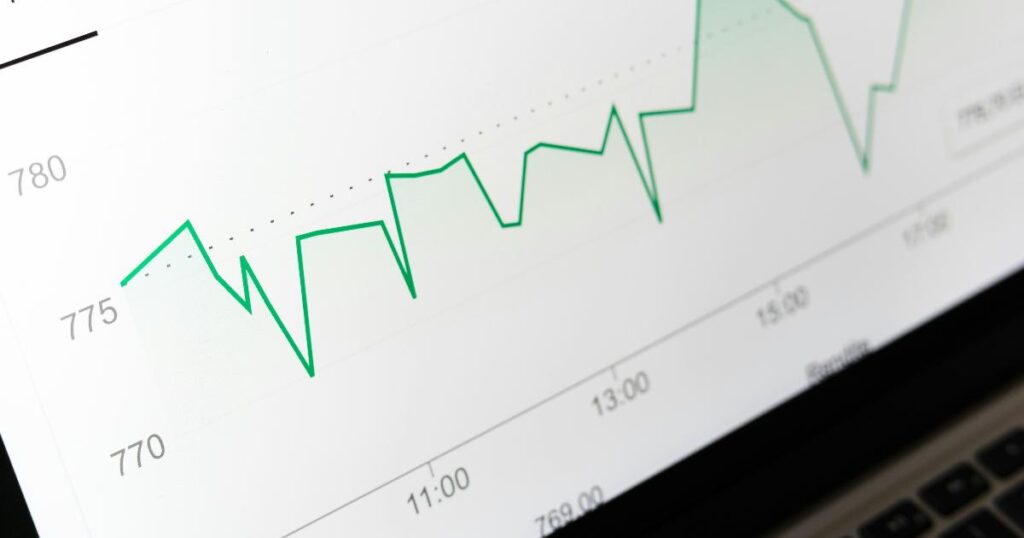
market signals

Two product team members review customer interview notes and market signals to judge the founder credibility behind an experiment
Product Decisions

The Evidence You Forgot to Collect: Yourself

When an early product test comes back with a promising number — a waitlist that fills up, a pilot customer who says yes, a demo that gets forwarded around — most teams ask one question: is this signal real? Almost nobody asks the second, equally important question: are we the kind of team that should trust this signal enough to act on it?


Analyst reviewing market data screens while AI-generated signals converge in a crowded trading environment, showing the risk of AI validation mistakes
Validation Mistakes

When Everyone Asks the Same Machine the Same Question

Picture a hundred hedge fund analysts opening the same news alert at the same moment, running it through the same kind of AI model, and reaching the same trade idea within minutes. Nobody cheated. Nobody colluded. Each analyst simply used a smart tool the way it was designed to be used. And yet the market that emerges from that scene is not smarter than the one it replaced — it is more crowded, more fragile, and, in a strange way, easier to fool.

A row of chickens in a coop illustrating the super chicken trap and the difference between strong signals and a strong system
Validation Mistakes

The Super-Chicken Trap: Why Strong Signals Don’t Always Mean a Strong System

A founder recently told me their beta users “loved” the product — glowing comments, five-star reactions, one enthusiastic superfan who wouldn’t stop talking about it. Six months later, almost none of those people paid for it. Nothing about the individual signals was fake. The mistake was assuming that a handful of strong local signals summed up to a strong global truth. That gap — between what looks like proof and what actually is proof — is where most validation goes wrong, and a decades-old chicken experiment explains why better than most startup advice does.

Founder reviewing customer interview notes and market signals as part of a demand validation process
Demand Experiments

The Curiosity Test: Why Founders Should Interrogate Demand Before They Chase Capital

Every founder eventually hears some version of the same pitch: investors back people, not ideas. Charisma, ambition, an origin story about noticing what everyone else missed — these are the ingredients of a good fundraising conversation. But there is a quieter, less flattering question that determines whether any of that matters: does anyone actually want what you are building badly enough to change their behavior for it? That question cannot be answered by telling a good story. It can only be answered by testing one.

A researcher reviews pricing charts and customer notes to judge whether a pricing experiment reveals real demand or hidden confusion
Demand Experiments

When a Price Tag Stops Telling the Truth

Imagine two friends open the same grocery app, from the same city, at the same minute, and add the same items to their cart. One pays a little more. Neither of them ever finds out why — the algorithm making the decision isn’t in the habit of explaining itself. That small, invisible gap is not just a pricing quirk. It’s a signal about what a business actually believes it’s selling: a product people choose freely, or a number people simply fail to notice.

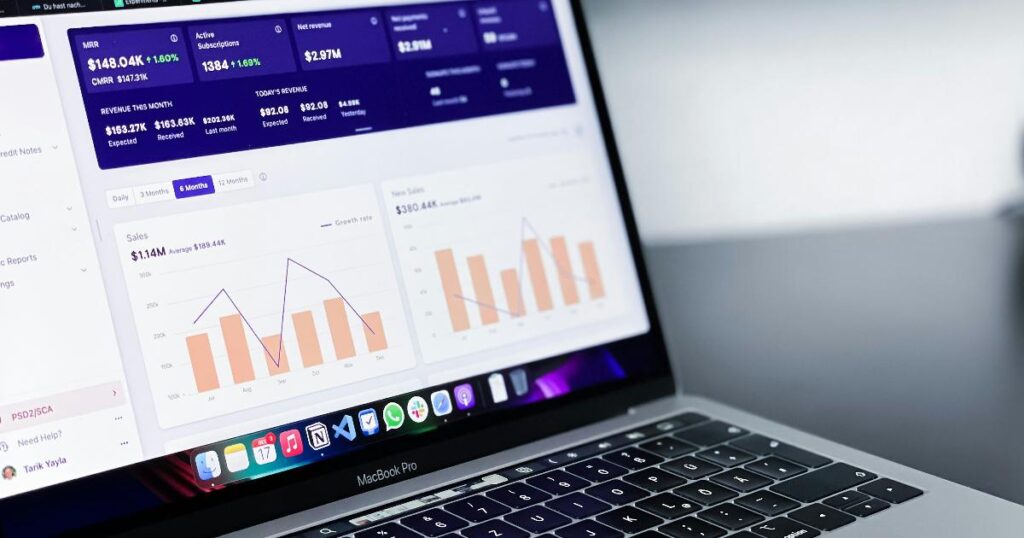
A business dashboard with live metrics and a laptop showing notes on validation, illustrating the fast data validation mistake
Validation Mistakes

The Dashboard Lied to You (Sort Of): Why Fast Data Isn’t the Same as Proof

Two screens, two answers. The live tile says revenue jumped. The weekly report, pulled from the same underlying business, says it didn’t. Nobody made an error. Nobody fudged a number. Both dashboards are doing exactly what they were built to do — and that’s precisely the problem. When a founder or product manager treats “fast” as a synonym for “true,” a perfectly ordinary technical quirk turns into a false story about demand.

Scroll to Top