
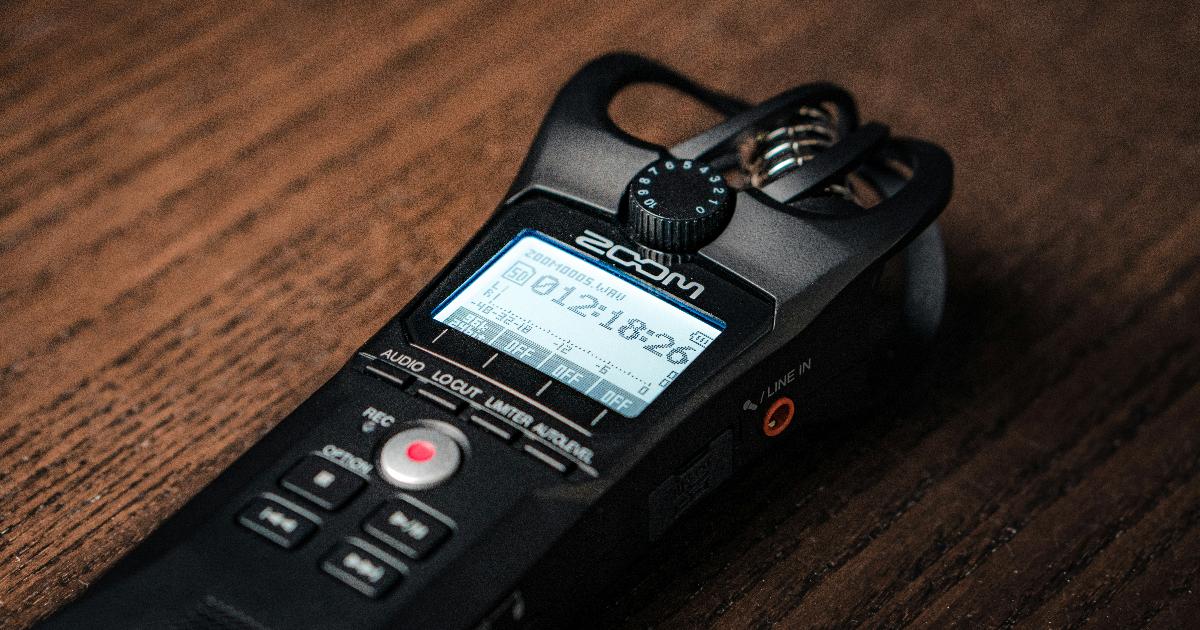
Pocket, a Y Combinator-backed startup, says it has sold more than 200,000 of its $199 AI voice recorders in the eight months since launch, reaching what its CEO describes as a $100 million run rate, with a projected path toward $1 billion within two years. Those are eye-catching numbers. They’re also the kind of numbers that are easy to misread if you don’t understand what a "run rate" measures — or what it doesn’t.
The Pivot Hiding Inside the Growth Story
The part of Pocket’s story that matters most to founders isn’t the sales chart. It’s the sequence of decisions that got the company there.
Cofounders Akshay Narisetti and Gabriel Dymowski started, like countless teams before them, with a software idea: an app that took notes during meetings. It’s a reasonable place to start — low cost, fast to ship, easy to iterate. But when they watched how people actually used it, a pattern emerged. Doctors and salespeople, people who move through back-to-back, face-to-face conversations all day, didn’t want another app competing for a glance at their lock screen. They wanted something that didn’t require unlocking a phone at all — "every single time they tried to unlock their phone, they could rather press a simple button," Narisetti told Business Insider.
That single observation reframed the whole problem. The founders tried glasses, then pendants — chasing the same wearable-AI dream that had already produced one very public failure, Humane’s Ai Pin, which overheated, disappointed reviewers, and was eventually sold off for parts. Only after those experiments did the team land on a slim, MagSafe-style device with a contact mic built to capture phone calls without a speakerphone, and a battery that lasts days rather than hours.
This is the shift worth studying: from a broad promise ("we’ll help you take better notes") to a narrow, specific job ("we’ll capture the offline conversation you’re already having, without asking you to touch your phone"). A narrow, well-defined use case is usually a stronger signal of real demand than a broad one — it’s harder to fake enthusiasm for something that specific, and much easier to tell when it’s genuinely solving a recurring problem.
flowchart LR
 A[Broad idea: meeting-notes app] --> B[Observed behavior: users avoid unlocking phone]
 B --> C[Hardware experiments: glasses, pendants]
 C --> D[Narrow job: capture offline conversations]
 D --> E[Testable signal: paid device + subscriptions]
Reading the Signal Without Overreading It
Once you see the pivot, the sales figures start to look less like a victory lap and more like a demand experiment that’s still running. Some parts of it are genuinely informative. Others aren’t, at least not yet.
Paying $129 to $199 upfront for an unproven device is a meaningfully stronger signal than downloading a free app — money changes hands before the product has had a chance to prove itself day to day. Independent estimates put Pocket’s annualized revenue in the tens of millions as of early 2026, with subscriptions actually outpacing hardware sales in the revenue mix — roughly 54% subscription to 46% hardware, according to one research estimate. That split matters: it suggests people aren’t just buying a gadget once and forgetting about it — subscription revenue implies the device is being turned on again and again, which starts to look less like a novelty purchase and more like an established habit.
Word of mouth is another data point worth weighing carefully. Pocket attributes most of its growth to direct-to-consumer sales and referrals rather than Amazon or paid channels, with less than 10% of revenue coming through Amazon. Word of mouth tends to be loudest when a product solves a problem people run into repeatedly and visibly — a doctor recommending the device to a colleague, a salesperson mentioning it after a client meeting. That’s a more durable kind of signal than a one-time press hit or influencer post, though it’s not proof by itself.
What the numbers can’t yet tell anyone — including, likely, Pocket itself — is how durable this is. A "run rate" annualizes a short window of revenue; it is not the same as $100 million actually earned over twelve months, and Business Insider’s own reporting flags this distinction explicitly. Eight months into a launch, with 50% month-over-month growth, is also exactly the window where launch enthusiasm, media coverage, and early-adopter curiosity can inflate numbers that later cool.
| Signal | What it suggests | What it doesn’t prove |
|---|---|---|
| 200,000 units sold at upfront cost | Real willingness to pay, not just curiosity | Whether devices are used regularly or shelved after a week |
| $100M run rate / ~$27M annualized estimate | Fast revenue growth in the short term | Twelve months of actual earned revenue, or that the pace holds |
| Subscription revenue nearly matching hardware | Recurring use, not a one-off purchase | Long-term retention or renewal rates |
| Strong word of mouth, low ad/Amazon dependence | A specific workflow problem resonates | That growth will scale past early adopters (doctors, sales reps) |
| Privacy criticism from press and peers | The product touches a real social nerve | Whether criticism helps or hurts long-term adoption |
Demand Validation Includes the Uncomfortable Parts
There’s a temptation, when a company reports triple-digit growth, to treat every criticism as noise. But part of testing demand for a physical product that listens to other people is testing social acceptability, not just revenue.
Pocket’s category has drawn scrutiny over consent — a Wall Street Journal report cited concerns that AI notetakers make it easier to record conversations without the other person explicitly agreeing to it. Narisetti’s response is that Pocket is more transparent than always-on wearables because it has to be placed visibly on a table and manually switched on. That’s a fair design distinction, but it’s worth being clear-eyed: visibility and a manual button reduce some risk, they don’t eliminate the underlying tension of recording another person during a conversation. Whether that friction quietly caps how far the product can spread, or whether it turns out to be a non-issue for most buyers, isn’t something the sales numbers alone can answer.
What to Take From This Before You Build Anything
None of this proves Pocket has found lasting product-market fit, and it doesn’t prove AI hardware is a safe category — the graveyard of pendants and pins says otherwise. What it does offer is a clean illustration of how a demand experiment can be read honestly: watch for a specific, repeated job someone is already trying to solve badly; look for people paying before you’ve built the polished version; treat subscriptions and word of mouth as stronger evidence than press coverage; and keep the experiment narrow enough that you can actually tell what’s working, rather than declaring success the moment growth looks good on a chart. The recorder itself is just a device. The more transferable product is the sequence that produced it — noticing what a broad idea couldn’t do, and having the discipline to build something smaller and sharper instead.