
Teams often treat a prototype test the way they’d treat a taste test at a farmers market: did people like it, yes or no? But "liked it" or "didn’t like it" is rarely the useful output. The useful output is a decision — iterate, retest, change the underlying hypothesis, or stop. This piece is about how to get from a handful of observations to that decision, without pretending the prototype gave you more certainty than it did.
Start With the Assumption You’re Most Afraid Of
Every product idea rests on a stack of beliefs the team hasn’t verified: that people will reach for a particular button, that a workflow makes sense in the order you designed it, that a material will hold up, that a price will feel fair. Not all of these beliefs carry equal weight. Some are cheap to be wrong about; others would sink months of work if they turned out false.
The most disciplined approach starts by ranking those assumptions and building the prototype around the ones that would be most expensive to get wrong later — not the ones that are most fun to visualize. A team polishing the finish of a housing before confirming that the core mechanism even works is optimizing the wrong variable at the wrong time; a rough model built specifically to interrogate the riskiest unknown is worth more than a beautiful one that answers a question nobody was asking.
This is also why a good test changes only one or a few variables at a time. If you alter the layout, the copy, and the interaction pattern simultaneously, a confused user tells you nothing specific — you can’t tell which change caused the confusion. Isolating the change is what makes the result readable afterward.
Fidelity Decides What Kind of Answer You Get
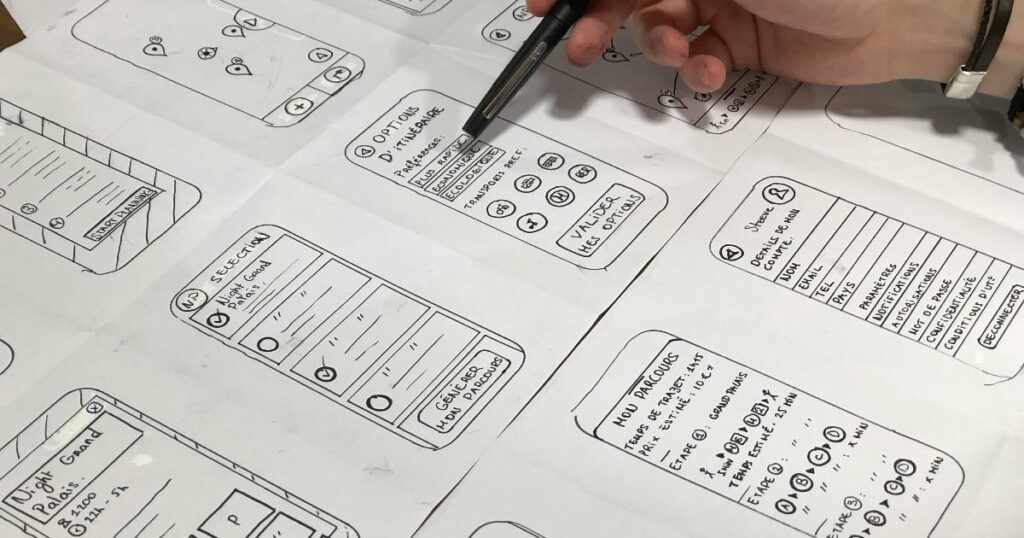
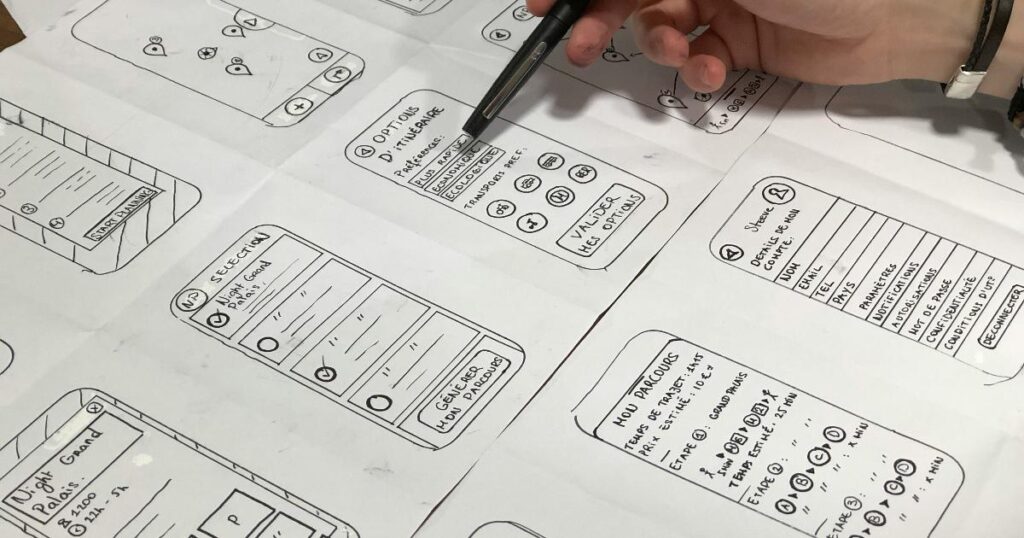
Not every prototype is built to answer the same question, and mismatching fidelity to question is one of the most common ways teams misread their own results. A rough, unfinished model — foamcore, a paper flow, a clickable wireframe — invites blunt, structural feedback: does the sequence of steps make sense, does the concept hold together at all. People treat something visibly unfinished as safe to criticize. A high-fidelity prototype, closer to production quality, is suited to a different question entirely: does this feel trustworthy, is the texture right, does the interaction feel natural once the core concept is no longer in doubt.
The practical trap is testing a rough prototype and expecting to learn about "feel," or testing a polished one and expecting people to challenge the underlying concept — by that stage, most participants assume the concept is settled and will comment on paint color instead. Matching fidelity to the research question isn’t a nuance; it’s the difference between a test that produces a decision and one that produces noise.
The same logic applies to what you actually watch. Asking someone whether they like an idea produces a polite, low-information answer. Watching where they hesitate, what they reach for first, where their eyes go before they act, or where they quietly work around a problem instead of naming it — that’s where the real signal lives. Behavior is harder to dress up than an opinion.
flowchart TD
 A[Identify riskiest assumption] --> B[Build minimum prototype to test it]
 B --> C[Observe behavior, not preference]
 C --> D[Document evidence and interpretation]
 D --> E[Decide: iterate, retest, reframe, or stop]
Was It the Idea, or Was It the Test?
Before a team lets one difficult session kill a concept, it’s worth asking a second question: did this prototype fail because the idea is wrong, or because the test itself was set up in a way that couldn’t answer the question? A confusing task script, an unrepresentative participant, a prototype tested outside its realistic environment, or simply too low a fidelity for the question being asked can all produce a "bad" result that has nothing to do with the underlying concept. A device that performs cleanly on a desk in a quiet office can behave very differently once someone is wearing gloves in a noisy environment it was actually designed for — the setting itself is part of the evidence.
This distinction matters because the two failures call for opposite responses. A flawed test calls for a better test of the same assumption. A flawed concept calls for a different assumption entirely.
Turning Observations Into a Decision, Not a Verdict
Once you have evidence — video, notes, a stack of screenshots, a pile of half-finished tasks — the temptation is to average it into a general impression. Resist that. A more useful habit is to sort what you saw into a small number of recognizable patterns and match each to a next step, rather than debating the mood of the room.
| Observed issue | What it likely means | Reasonable next move |
|---|---|---|
| Users complete the task but hesitate at one step | A specific, fixable friction point, not a rejection of the concept | Iterate: adjust that step and retest narrowly |
| Users interpret the interface differently than intended | A mental-model mismatch, often solvable with wording or layout | Iterate: revise language or hierarchy, retest with new participants |
| Users complete the task easily in a controlled setting but not in a realistic one | The prototype’s fidelity or test conditions, not the concept, may be at fault | Retest under more realistic conditions before changing the design |
| Users don’t attempt the task the way you expected at all | The underlying need or workflow assumption may be wrong | Reconsider or reframe the hypothesis |
| Users complete the task but show no motivation to use it again | A "nice, but not necessary" signal | Reconsider priority or the value proposition itself |
| Feedback is uniformly polite and non-specific | Low-fidelity or leading test design, not necessarily a good sign | Retest with a rougher prototype, neutral tasks, and closer observation |
None of these outcomes settle the matter permanently. A single round, however well run, narrows uncertainty — it doesn’t erase it. The point of the table isn’t to give a final verdict; it’s to stop a team from collapsing a specific, fixable observation into a vague "it didn’t land" story, or inflating a good session into proof of market fit.
Prototype Report Structure: Separating Evidence, Interpretation, and Action
The paper trail matters as much as the test itself, because stakeholders who weren’t in the room will make the go/no-go call based on how the findings are written up. The recurring mistake is collapsing what was observed and what the team thinks it means into a single sentence — "users didn’t like the confirmation screen" — which erases exactly the distinction a decision-maker needs.
A more useful report keeps three things visibly separate:
| Field | Question it answers | Example |
|---|---|---|
| Evidence | What did the participant actually do or say? | Two of five participants clicked "confirm" without checking the new total shown above it |
| Interpretation | Why does the team believe this happened? | The price summary may be positioned below the field people scan first |
| Action | What should change, or what should be tested next? | Move the total above the button and retest with the same task |
This structure — used in disciplined prototype and usability work rather than treated as an afterthought — keeps a report honest about what is known versus guessed. It also makes disagreement productive: two reviewers can agree on the evidence while debating the interpretation, instead of arguing past each other over a single blended impression.
The Decision, Not the Verdict, Is the Point
None of this turns a prototype into proof. A successful session tells you a direction survived one test under one set of conditions with a small number of people — not that a market wants the product, and not that the concept is ready for manufacturing, compliance, or launch. What it does give you, if you’ve isolated the variable, matched the fidelity to the question, and documented evidence separately from opinion, is something more valuable than reassurance: a specific, defensible answer to "what should we do next, and why." That’s the actual output of a prototype test — not applause, and not a death sentence, but a clearer map of what’s still uncertain and what finally isn’t.