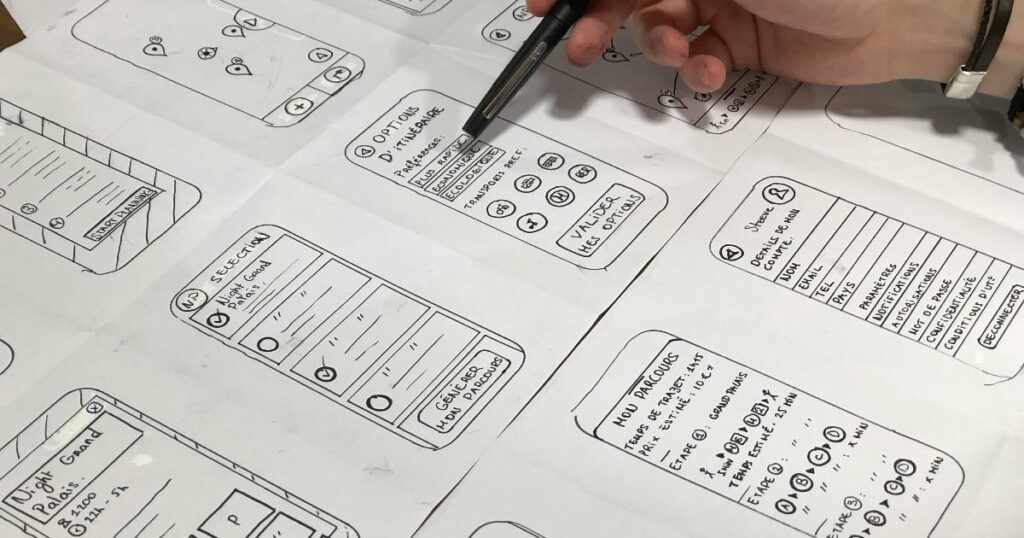
A prototype is built to learn. Production is built to repeat. Those are not the same skill, and they don’t measure the same thing. A prototype answers "can this product exist?" Production asks something harder and far less flattering: "Can we make this consistently, ship it on time, keep the quality stable, and stay solvent while doing it?" A successful prototype tells you almost nothing about that second question.
So the real decision after a prototype isn’t a binary "scale or stop." It’s a structured choice between several next moves — run one more test, change the design, switch suppliers, formally check readiness, or walk away from manufacturing before you burn more cash. This guide is about making that choice on evidence instead of optimism.
Why the Handoff Is Where Teams Stumble
Manufacturing changes the rules. A product that behaves perfectly in a small test run may need real adjustments before it can be produced at volume, because production introduces sourcing, scalability, quality control, packaging, shipping, and compliance — all at once. Each of those is a place where a clean prototype quietly falls apart.
What makes this stage genuinely dangerous is that the decisions tend to lock in. Once you’ve committed to tooling, accepted a supplier’s minimum order quantity, and signed a contract, reversing course gets expensive fast. You’re not just spending money — you’re narrowing your options. That’s why the work before you commit matters more than the enthusiasm after the prototype.
It helps to separate two states cleanly. "The prototype works" is an engineering result. "Production is ready" is an operational judgment that pulls together design stability, supplier reliability, quality systems, and cash. A simple way to keep yourself honest is to treat readiness as a checkpoint with its own evidence — not as something you’ve automatically earned by building a working sample. The further along you are on questions of repeatability, supplier qualification, and cash, the closer you are to genuine readiness. This kind of staged thinking can be a useful lens, though it isn’t a formal universal standard you must satisfy across every industry.
Reading the Signals Before You Decide
Before you pick a path, gather evidence in four areas. None of them alone decides anything — that’s the point. Viability is a pattern across signals, not a single number.
Design stability. Did the prototype need hand-tuning to work? Custom one-off parts? If the thing only functions because you coaxed it, that’s a design-iteration signal, not a green light to manufacture.
Supplier behavior. This is the one founders most often misread as mere annoyance. Slow responses during the sales process, vague or shifting pricing, missing documentation on specs and certifications, and an inability to explain their own quality-control procedures are all red flags worth taking seriously. A supplier who can’t clearly describe how they inspect and test before you’ve signed anything is unlikely to get more rigorous once you’re locked in. Treat these as data about future reliability, not as friction to push through.
Unit economics in full. Founders fixate on per-unit price and overlook everything wrapped around it: tooling and setup fees, testing, packaging, freight, warehousing, duties, and inspections. A low per-unit quote attached to a minimum order quantity you can’t realistically sell isn’t a good deal — it’s inventory risk dressed as savings. And a cheaper supplier or faster timeline can be the wrong choice if it raises defect risk or strains your cash.
Cash flow. More on this below, because it deserves its own attention.
The Cash Flow Reality Nobody Warns You About
Here is the uncomfortable truth: a business can look profitable on paper and still run out of money. Manufacturing makes this especially brutal because you pay for materials, labor, and equipment long before customers pay you. In a survey of UK manufacturers, 67% cited working capital as a key concern — the most commonly named financial challenge in the sector.
The metric to internalize is the cash conversion cycle — the number of days money is tied up between paying suppliers and collecting from customers. It combines how long inventory sits, how long customers take to pay, and how long you take to pay suppliers. The longer that gap, the more cash you need just to keep the lights on. Sustained positive cash flow is arguably a stronger indicator of business health than profitability, because a profitable company that can’t bridge that gap still stops.
For a young product company, this reframes the whole supplier conversation. Payment terms, deposit requirements, and minimum order quantities aren’t paperwork — they’re the difference between a launch you can fund and one that quietly drains you. Negotiating staged payments, smaller initial runs, or consignment terms can matter as much as the unit price itself.
A Decision Matrix for What Comes Next
Pull the signals together and most teams land on one of five paths. The table below maps what each signal pattern tends to point toward. Read it as a way to organize evidence — not as a verdict any single row can deliver on its own.
| Dominant signal | What you’re seeing | Likely next move | What it buys you |
|---|---|---|---|
| Design needs hand-tuning to work | Inconsistent samples, custom one-offs | Iterate the design | Repeatability before you commit tooling |
| Supplier red flags | Vague pricing, weak quality answers, slow replies | Retest or change supplier | Reliability evidence, lower defect risk |
| Numbers don’t close | High landed cost, punishing MOQ, long cash cycle | Rework unit economics / terms | A fundable launch instead of a cash trap |
| Everything looks plausible | Stable design, credible supplier, workable cash | Run a readiness check / small batch | Proof before scaling, not just hope |
| Signals stay bad after testing | Repeated quality or cash failures | Disciplined exit from manufacturing | Capital and time saved for a better idea |
That last row deserves respect. Choosing not to manufacture isn’t failure — it’s a legitimate, sometimes smart outcome that protects you from a far more expensive failure later.
From Result to Decision
The sequence itself is simple, even if the judgment isn’t. The point is to route deliberately rather than defaulting to "let’s just order more."
flowchart TD
 A[Prototype result] --> B{Design repeatable?}
 B -->|No| C[Iterate design]
 B -->|Yes| D{Supplier reliable?}
 D -->|No| E[Retest / change supplier]
 D -->|Yes| F{Cash cycle workable?}
 F -->|No| G[Rework economics]
 F -->|Yes| H[Readiness check / small batch or exit]
Notice that a small-batch run lives near the end of this flow, not the start. Beginning with smaller production lets you surface problems before committing serious capital. But a successful small batch still doesn’t guarantee profitable scale or real market demand — it’s another test, not a finish line.
Building Real Supplier Quality, Not a Single Check
If your decision leans toward proceeding, supplier quality becomes the area where good intentions quietly fail. The weak version is one inspection and a hopeful handshake. The robust version layers several practices together.
Strong supplier quality assurance combines qualification before you commit, periodic audits, written quality agreements that spell out specifications and standards, incoming inspection of what arrives, and ongoing performance tracking on metrics like defect rates and on-time delivery. The reason for layering is that any single check has blind spots; together they create a system that catches problems early — when they’re cheap — rather than late, when a defective batch has already shipped. Low-quality materials don’t just annoy customers; they drive rework costs that hit your bottom line directly. That’s the link founders miss: quality control and cash flow are the same decision viewed from two angles.
Document the Findings — Honestly
Before you commit to anything irreversible, write down what you actually learned. Not a pitch. A record. A useful post-test structure separates four things:
- What the prototype proved (the function — and only the function).
- What’s still unproven (repeatability, supplier reliability, demand at scale).
- The full landed cost and cash picture, including deposits, MOQs, and your estimated cash conversion cycle.
- The supplier evidence — communication quality, documentation, quality-control answers — read as signals, not gripes.
This discipline does one essential thing: it stops you from confusing a working prototype with a viable production plan. The gap between those two is exactly where the costly mistakes hide.
The Honest Takeaway
A prototype proves an idea can work. It cannot prove your business can afford to make it, ship it, and fix it at scale. The decision after a prototype is rarely "scale" or "stop" — it’s usually a more precise choice between one more test, a design change, a different supplier, a readiness check, or a clean-eyed exit.
Your intuition and experience earned you the working prototype. Use them again here — but pair them with evidence on design stability, supplier reliability, quality systems, and cash. No single metric settles it, and manufacturing isn’t automatically the right next step just because the prototype impressed everyone in the room. The teams that survive the handoff are the ones who treat "ready" as something they prove, not something they assume.
This article covers product and operations decision-making, not legal, tax, or regulatory guidance — consult appropriate professionals for those. Any supplier or manufacturing arrangement mentioned is illustrative, not a recommendation.